Where to eat in Estepona? Let's start with what matters: you eat well here. Anyone who has spent a summer here knows that.
The hard part isn't finding somewhere to eat, it's finding the place you're actually after: the one that makes you feel you're in Andalusia and not on any old seafront in Europe. In a town with dozens and dozens of restaurants, bars and beach bars, choosing well is the difference between just another meal and a memory from your trip.
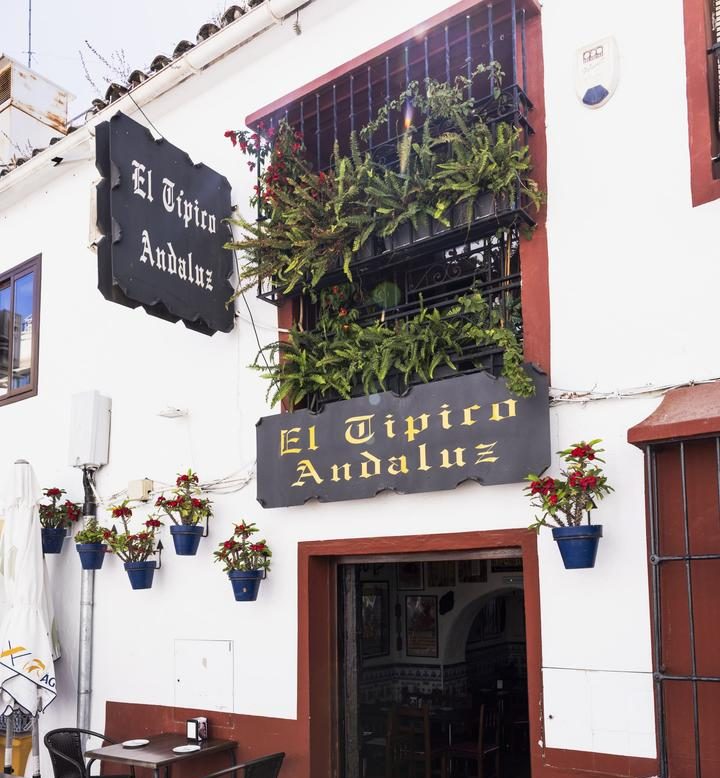
At El Típico Andaluz we've been on Calle Caridad since 1962 and we've seen plenty of trends come and go. So we want to tell you, as honestly as we can, how people eat in Estepona, which dishes you shouldn't leave without trying, how to spot real cooking and, of course, what you'll find if you sit down at one of our tables.
The three worlds of Estepona's food
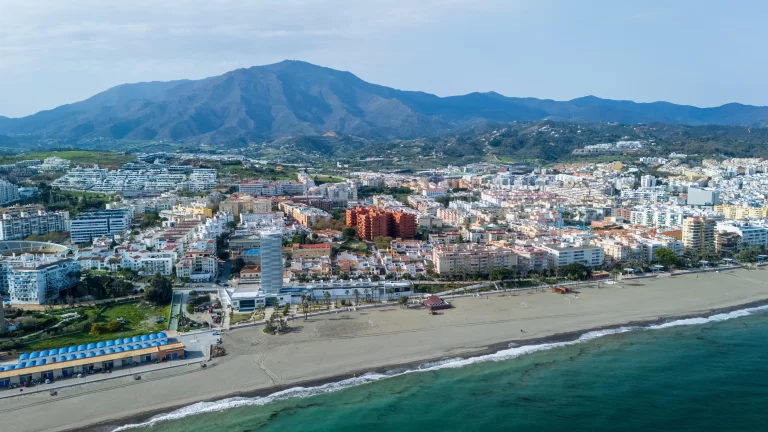
Estepona has something few coastal towns still have: sea, countryside and mountains just a few kilometres apart. And you can taste it. To understand where to eat in Estepona, it helps to think of three different worlds.
The sea: fish, espetos and the harbour
Estepona is, first and foremost, a fishing town. At dawn the purse-seine boats come into the harbour, and in the afternoon the fish market holds its auction for the catch from trawlers, trammel nets and longlines. That's why the sardines, anchovies and fish from the bay taste so special here.
The star dish of summer is the espeto de sardinas: sardines skewered on a cane and grilled over embers right on the sand. You'll find it mostly at the beach bars and around the harbour. Fried fish, fresh anchovies and squid are the other great classic of the Málaga coast. If you're coming to Estepona, an espeto with your feet almost in the water is a must.
The countryside and the mountains: food from the land
Behind Estepona lie Sierra Bermeja and, a little further on, the Serranía de Ronda. That's where the goat's cheeses, cured meats, hearty mountain stews and humble dishes like sopa campera come from. Inland cooking is what keeps you warm in winter and what grandmothers remember.
The old town: tapas, sharing plates and classic cooking
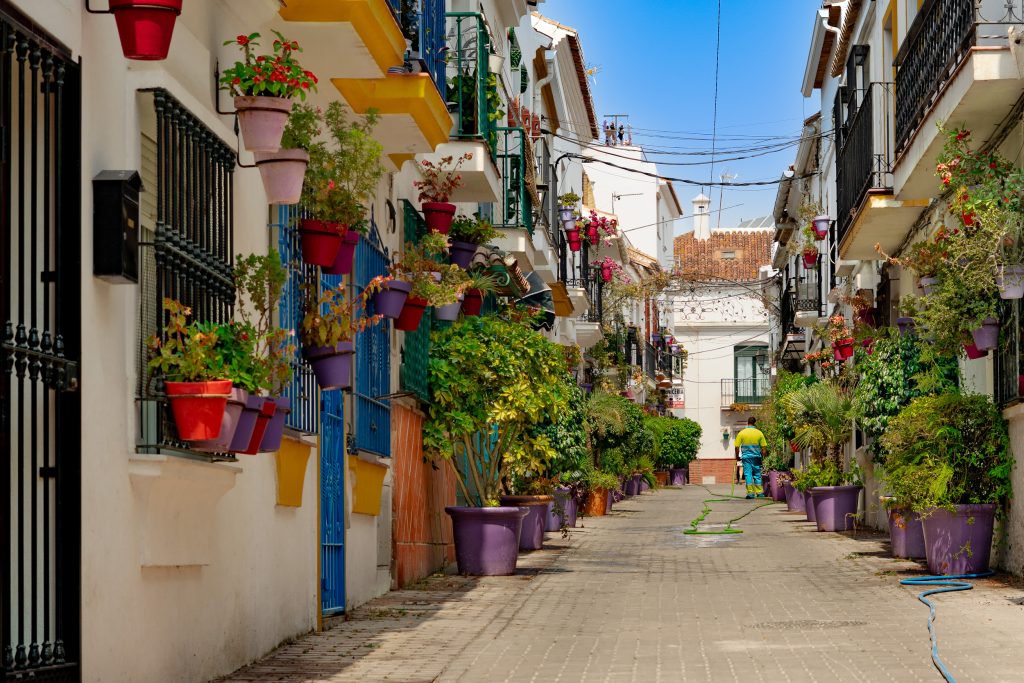
And then there's the historic centre, where traditional tapas are at their best. This is where you go to snack standing at the bar, share plates on a street terrace or make dinner last in a dining room full of history. It's the world we live in, and the one we're going to tell you about in more detail.
What to eat in Estepona if you want real Andalusian food
Here's our list of must-tries. We serve some of them ourselves and you'll find others along the coast, but they're all part of how people eat in Andalusia.
- Iberian ham: the queen of tapas. Thin slices, with glistening fat, served at room temperature.
- Espeto de sardinas: the taste of summer in Málaga.
- Pescaíto frito: anchovies, squid, marinated fried fish. Crispy outside, juicy inside.
- Homemade croquettes: the acid test of any kitchen. If the croquettes are good, everything else will be too.
- Salmorejo and gazpacho: the cold soups that save the summer.
- Russian salad: in Andalusia it's almost a religion. Every house has its own.
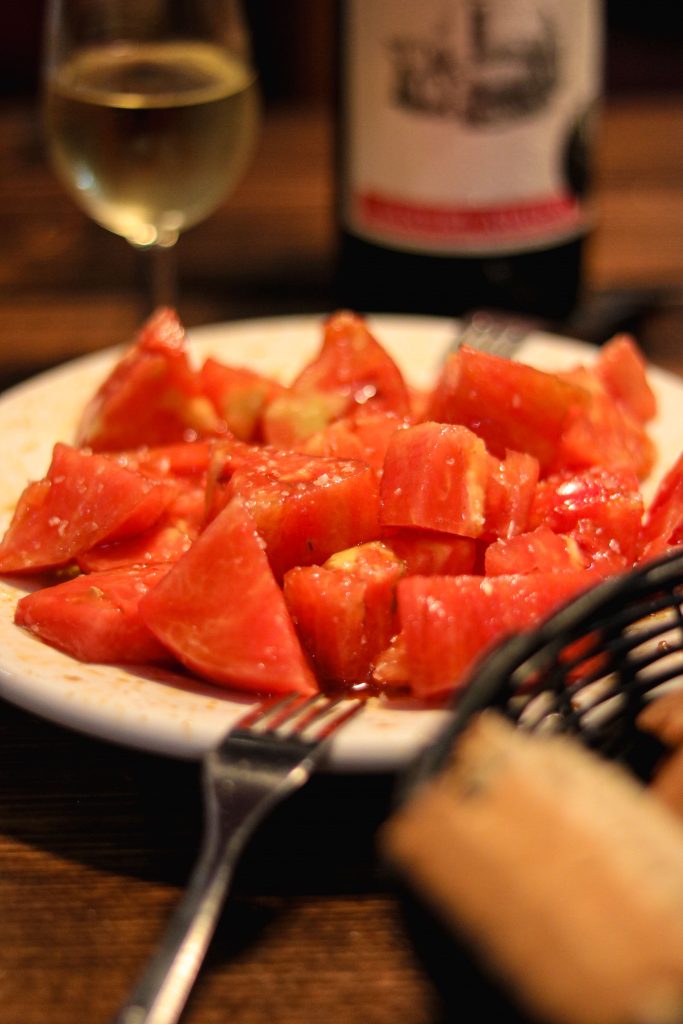
- Tomate aliñao: good tomatoes, extra virgin olive oil, salt and a little something from the sea on top, like melva or tuna belly.
- Chicharrones: the ones from Chiclana in Cádiz, thinly sliced, with salt and lemon.
- Carne mechada: the one from the Serranía de Ronda, served cold and thinly sliced.
- Oxtail stew: the classic from Córdoba, slow-cooked and meltingly tender.
- Iberian pork cheeks: tender enough to eat with a spoon, even better with Pedro Ximénez.
- Payoyo cheese: the goat's cheese from the Sierra de Cádiz, one of Spain's great cheeses.
A map of the Andalusian larder at El Típico
When we reopened in December 2025 we set ourselves one goal: the name on the door had to make sense in every dish. El Típico Andaluz has to taste of Andalusia, so we've built up a larder with produce from different provinces:
- Chicharrones from Chiclana (Cádiz)
- Carne mechada from Benaoján (Serranía de Ronda, Málaga)
- Payoyo cheese from Ubrique (Sierra de Cádiz)
- Melva and tuna belly from Barbate (Cádiz)
- Tomatoes from Conil (Cádiz)
- Olive oil from Jaén
- Olives and vermouth from Córdoba
- Pedro Ximénez for our sauces and desserts
- Wines from Sanlúcar and Chiclana
It's a way of travelling round Andalusia without leaving Calle Caridad. Every product has its own story, its village and its people behind it, and we love telling it when you ask.
What you'll eat at El Típico Andaluz
Here are the dishes people ask for most and the ones that best show who we are.
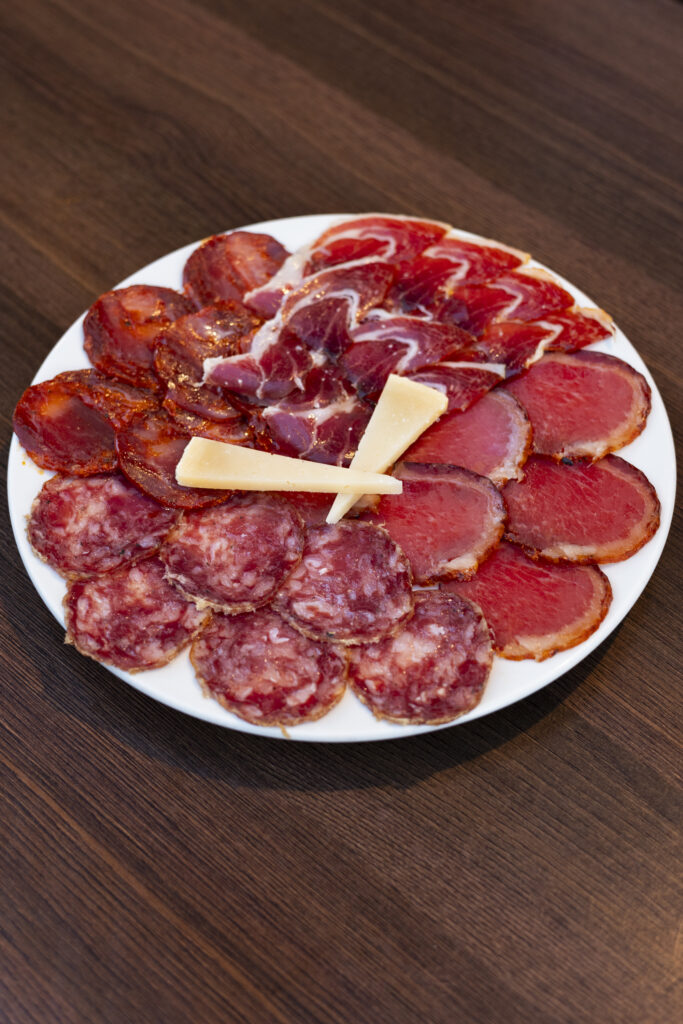
Iberian ham, our house speciality
If there's one thing that has defined El Típico for decades, it's ham. While Javier ran the place for 38 years, so many hams were carved here that the knives wore down with use. That collection of knives still hangs in the bar, and it's one of the things people photograph most. Today Iberian ham is still our flagship, as it always has been.
The Plaza de Toros board
Our sharing platter, named as a tribute to the bullfighting tradition that fills our walls. It's the best way to try a bit of everything if you come as a group or it's your first time.
Homemade ham croquettes
Made in-house, with old-fashioned béchamel and real ham. We also have prawn pil-pil croquettes for anyone who fancies a taste of the sea.
Dressed tomato with tuna belly
A classic of the Andalusian summer: good tomatoes, good olive oil and tuna belly from Barbate. Simple, fresh and perfect for lunch.
Our house Russian salad
Our own recipe, the one that defines us. Creamy, perfectly seasoned and made for mopping up with bread, no shame at all.
Patatas bravas with ham dust
An Andalusian twist on a Spanish classic. The same old patatas, finished with ham that makes them very much ours.
Hearty stews
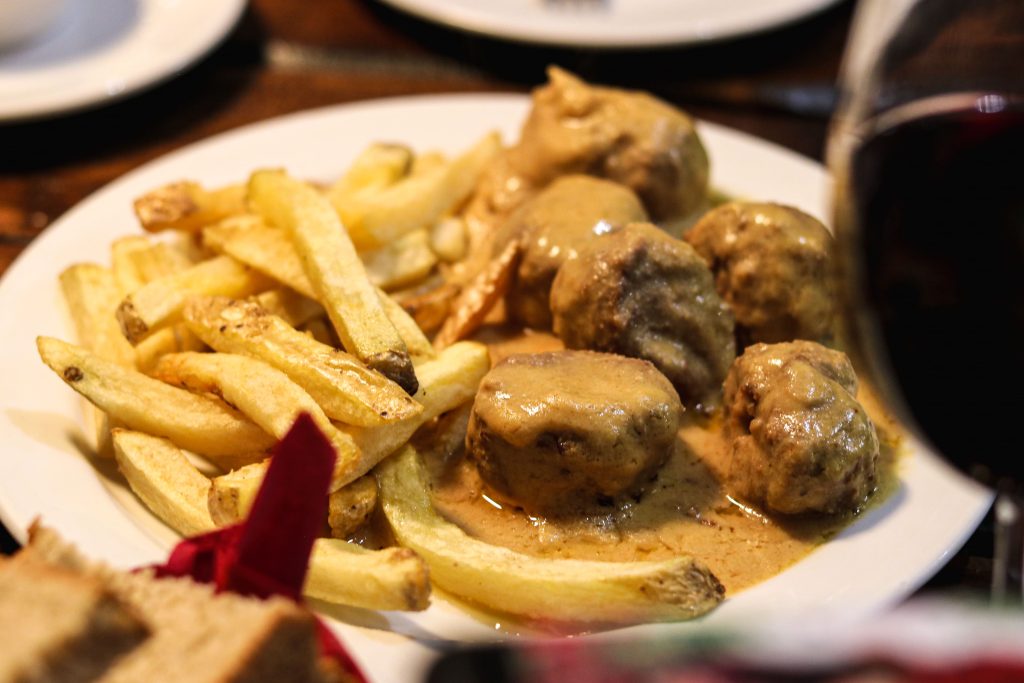
Para quien viene con hambre de verdad: carrillada ibérica al Pedro Ximénez, rabo de toro al estilo cordobés y albóndigas en salsa de almendras, una receta de abuela que ya casi no se ve en las cartas. Te contamos más de nuestros guisos en dónde comer carne en Estepona.
On the side
Chicharrones from Chiclana, carne mechada from Benaoján and payoyo cheese. And to drink, Andalusian wines from Sanlúcar and Chiclana and a vermouth from Córdoba that's well worth trying.
How to spot a good place for traditional food in Estepona
After more than sixty years on the same street, these are the signs we look for when we eat out ourselves:
- There are locals. If you hear a local accent at the bar, that's a good sign.
- The menu isn't endless. A kitchen that does twenty dishes well beats one that does a hundred so-so.
- The produce has a name. When a place tells you where its cheese, oil or ham comes from, it means they care.
- The cooking is real. Homemade croquettes, stews and old family recipes say more than any photo on the menu.
- The waiters make recommendations. If they ask what you feel like and give you advice, they know what they're serving.
- The place has soul. You can't fake a place with history. You see it on the walls, in the details and in how they treat you.
Meal times in Estepona
If you're visiting from outside Spain, this is for you. In Estepona, as in the rest of Andalusia, people have lunch late and dinner even later. Lunch is usually between half past one and four, and dinner from nine in the evening.
En El Típico Andaluz la cocina abre todos los días de 13:00 a 16:00 y de 19:00 a 00:00. Si te gusta cenar pronto, a las siete ya estamos sirviendo. Y si eres de los que alargan, a las doce todavía sale algo de la cocina. Y abrimos todos los días, también lunes y domingos: lo tienes todo en restaurantes abiertos todos los días en Estepona.
Where to eat in Estepona, depending on your plans
- As a couple: a table on the terrace on Calle Caridad, a board of Iberian cured meats and a bottle of Andalusian wine. That's all you need.
- With friends: sharing plates, the Plaza de Toros board and a bit of everything in the middle of the table. Tapas are at their best in groups of four to eight.
- With the family: familiar dishes for the little ones, like croquettes or potatoes, and hearty stews for the grown-ups.
- Weekday lunch: midday is the quietest time in the old town, especially out of season. Ideal if you live on the Costa del Sol and want a relaxed break.
- Groups and celebrations: if there are lots of you, or you want to organise a work lunch or dinner, give us a call beforehand and we'll get everything ready in good time.
Eating in Estepona out of season
There's a side of Estepona many tourists never see: the one from October to March. The sun still comes out almost every day, the terraces in the old town stay open and the pace is different. It's when the locals and the foreigners who live here all year round get their favourite spots back.
For us, winter is the best time for stews: oxtail, pork cheeks or meatballs in almond sauce taste twice as good when it's chilly. At Christmas the centre fills with lights and with family and work get-togethers. If you live in Estepona, Marbella, San Pedro, Casares or Manilva, come up to the old town for a weekday lunch. You'll find a table, peace and quiet and good food.
Tapas in Estepona: a quick guide to getting it right
Tapas are a way of eating, but also a way of spending time together. If you're visiting, these tips will help you enjoy it like a local.
- Order a little, and order often. Start with two or three dishes for the table, see how it goes and keep ordering. That way everything arrives hot and nobody goes hungry.
- Share. In Andalusia dishes go in the middle of the table and everyone picks at everything. Ordering one plate each is more restaurant than tapas.
- Start with the cold dishes. Ham, cheese, chicharrones, Russian salad or a dressed tomato get your appetite going while the kitchen gets the hot food ready.
- Save room for a stew. A stew at the end, even if you all share it, is what turns a few nibbles into a proper meal.
- Ask. The waiters know what's best that day and what goes with what you've already ordered. Take their advice.
- No rush. Nobody in the old town will hurry you to leave. Lingering at the table after a meal is part of the meal.
What to drink: wine, vermouth and ice-cold beer
In Andalusia you drink with your food, and you drink local. Few things go better with ham and chicharrones than a manzanilla from Sanlúcar or a fino from around Chiclana, dry, salty and well chilled. Full-bodied reds are great with stews, and to finish, a sweet Pedro Ximénez is almost a dessert in itself.
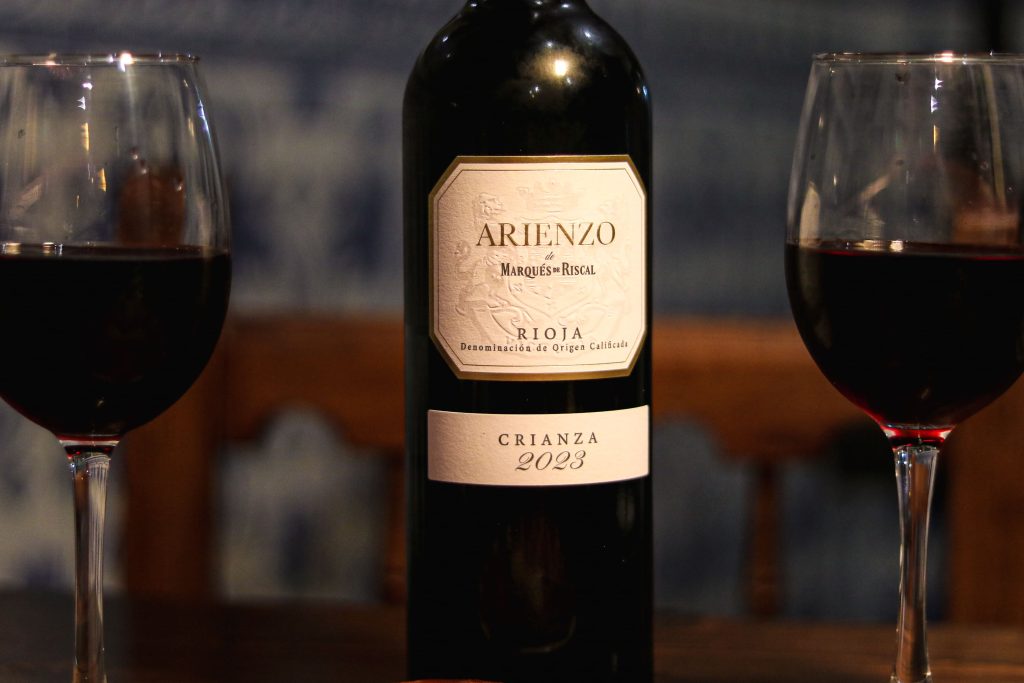
At midday, before lunch, vermouth hour is back in a big way. We serve a vermouth from Córdoba that surprises everyone who tries it for the first time, with ice and a slice of orange. And of course, in the height of summer a well-poured, ice-cold caña is still the best way to start any meal in Estepona. We're also putting together a small list of Andalusian wines with real character, so your trip round Andalusia carries on in the glass.
FAQs about where to eat in Estepona
What is Estepona's traditional food?
Fish from the bay, led by espeto de sardinas and pescaíto frito, plus the traditional Andalusian tapas and stews of the old town.
Where can I have tapas in Estepona?
In the old town, especially on lively streets like Calle Caridad, where El Típico Andaluz has been since 1962.
Where can I eat Iberian ham in Estepona?
At El Típico Andaluz, Iberian ham is our most historic product and has been with us for decades.
What time do people eat in Estepona?
Lunch is usually between 13:30 and 16:00 and dinner from 21:00. Our kitchen is open from 13:00 to 16:00 and from 19:00 to 00:00.
Do I need to book to eat in the old town?
It's highly recommended in summer, at Easter and at weekends. On weekdays out of season there's usually a table, but a quick call to 663 746 370 never hurts.
Can I eat at El Típico Andaluz if I don't speak Spanish?
Of course. Our team speaks English and the menu is in Spanish and English.
Come and eat on Calle Caridad
If you're looking for where to eat in Estepona and want somewhere with flavour, history and Andalusian soul, we're waiting for you at one of the oldest places in the historic centre. Iberian ham, classic recipes and a larder that covers Andalusia from end to end.
- Address: C. Caridad, 55, 29680 Estepona, Málaga
- Phone and bookings: 663 746 370
- Kitchen: 13:00 to 16:00 and 19:00 to 00:00, every day
- Menu in Spanish and English. Terrace and indoor dining room