There's one thing many of our customers say when they walk into El Típico Andaluz for the first time: «we had no idea Estepona was like this».
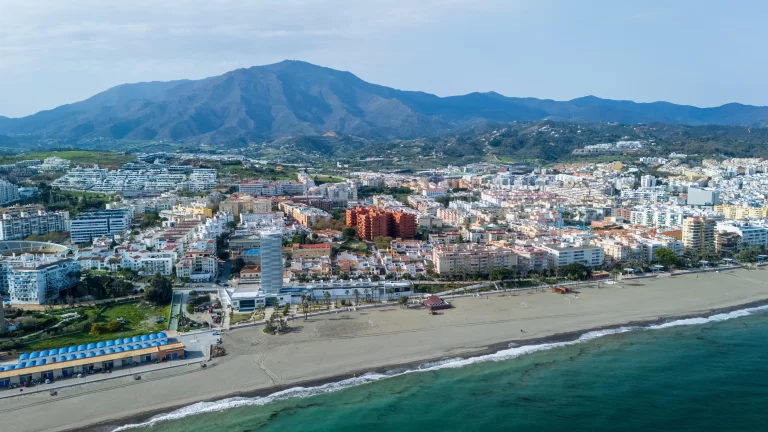
They come up from the beach, off the motorway or from a hotel on the coast, wander into the centre almost by chance and find a white town full of flowers, with quiet squares, neighbours chatting at their doors and the smell of stew drifting out of the windows. They've just discovered Estepona's old town.
That's what this neighbourhood is like, and in this guide we want to show it to you the way we see it, having been on Calle Caridad since 1962. We'll tell you what it's like, how to explore it on foot without missing the important bits, what makes Plaza de las Flores special, why Calle Caridad is one of the liveliest streets in the centre and a few tips for enjoying it without the crowds.
What exactly is Estepona's old town?
When we talk about Estepona's old town, we're really talking about several layers of history built up one on top of another.
The oldest is the Villa quarter, the core that grew up around the medieval fortress and San Luis Castle. It's the area closest to the sea, with short, narrow streets that still recall the walled town.
The second layer arrived in the 18th century. After gaining its independence from Marbella in 1729, Estepona began to grow beyond its walls. The Church of los Remedios was built and new streets appeared along the roads inland, with farmhouses, wayside taverns and inns. According to the neighbourhood's memory, our building was one of those inns, in what was then the edge of town.
The third layer is the 19th century, centred on Plaza de las Flores and the manor houses of the farming and merchant middle class. The 1894 town plan already shows a town laid out in a grid, with straight streets you can still recognise today.
And the fourth layer is the most recent: the «Estepona, Garden of the Costa del Sol» project, which over the last decade has renovated more than 130 streets, pedestrianised much of the centre and turned the façades into a vertical garden.
What the streets of the old town are like
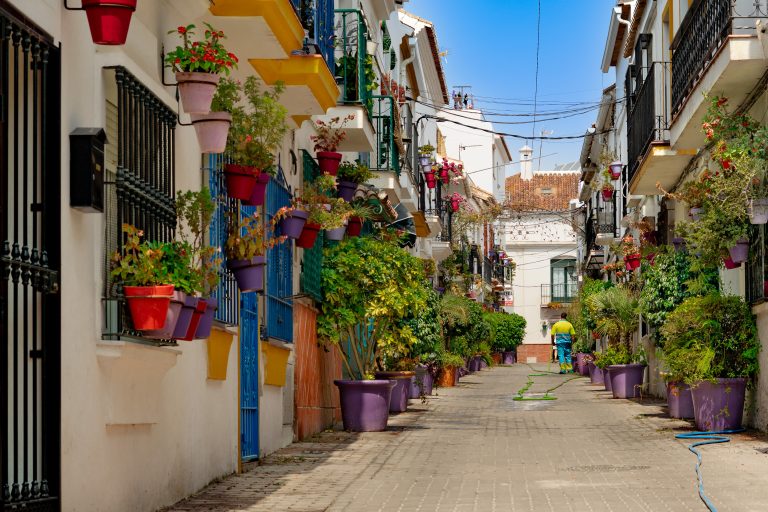
If we had to describe Estepona's streets in a few words, we'd say: whitewash, flowerpots and quiet. The façades are white and freshly whitewashed. The window grilles are wrought iron, many with their own flowerpot hanging from them. The paving mixes cobbles, stone and patterns of river pebbles.
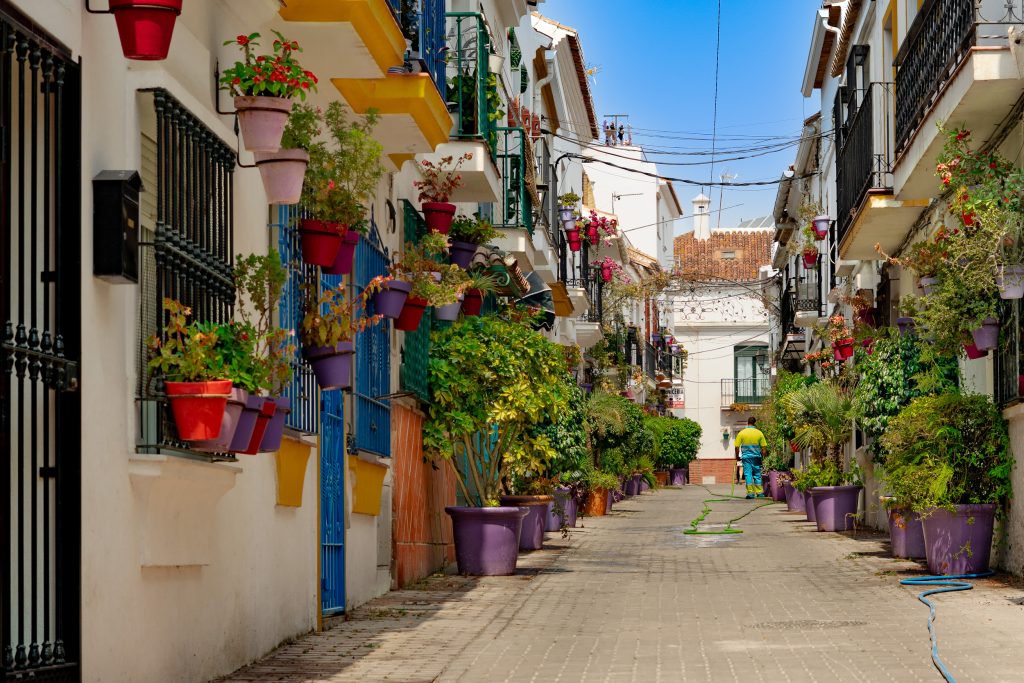
The most striking thing is the flowerpots. In many streets in the centre all the pots are painted the same colour, so there are blue, red, green, yellow and orange streets. It's a simple touch that turns a stroll into a game for young and old. In 2021 alone more than a million flowers were planted in the town, and it shows: geraniums, trailing ivy geraniums, bougainvillea and jasmine that perfume whole streets in spring.
Add to that the murals, now more than 60 across the town, and the poems hanging on some of the walls as part of the Poetry Route. Walking through Estepona's old town is, quite literally, reading the town as you go.
One important thing: these streets aren't a film set. People live here. The neighbours water their plants, bring their chairs out to enjoy the cool air and know everyone. We ask you the same as we ask ourselves: respect, keep your voice down at night and please don't climb onto people's doorsteps for a photo.
The walking route through the old town, stop by stop
This route takes about two hours at an easy pace, stopping for photos and a drink. The Tourist Office in Plaza de las Flores will give you a free map to help you find your way around the streets.
Stop 1. Plaza de las Flores
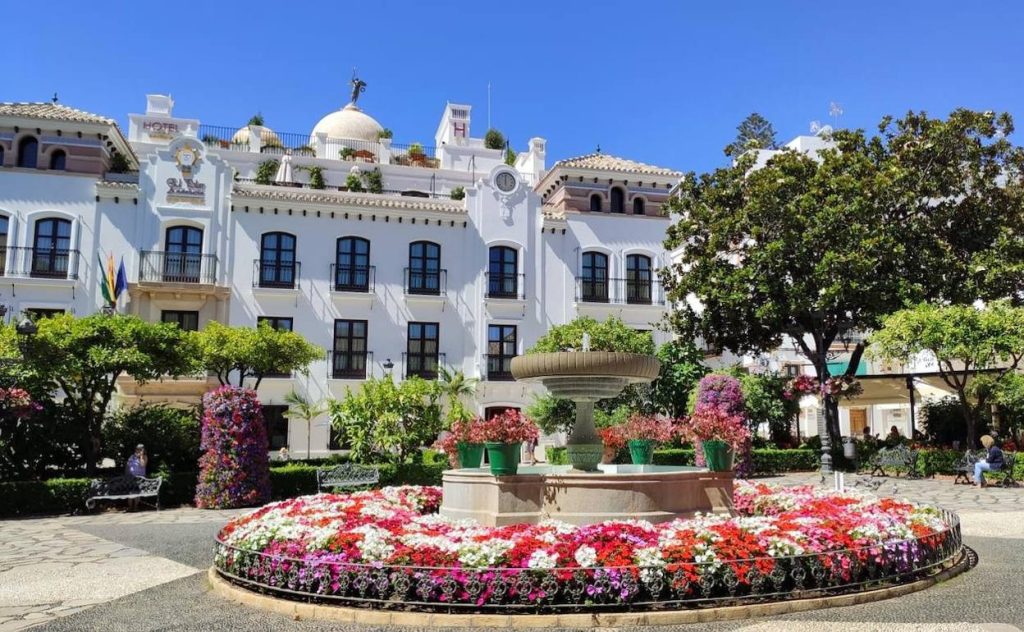
We start at the heart of the centre. Plaza de las Flores was laid out in the 19th century as the hub of Estepona's growth eastwards, and the most important houses of the time were built around it. Its name has changed with the political times: it has been Plaza Nueva, Plaza de la Cárcel (the jail was in the old town hall building), Plaza de la Constitución in honour of the 1812 Constitution, Plaza del Rey after Ferdinand VII and, for a while, Plaza de José Antonio. Today it's Plaza de las Flores, the Square of Flowers, and the name suits it perfectly.
Take a look at the central fountain, the flowerbeds bursting with colour and the 19th-century façades. The Casa de las Tejerinas and the Tourist Office are here. In summer the square fills with families as the sun goes down, and at Christmas it's one of the best-lit corners in town.
Stop 2. The colourful streets
From the square, head out along any of the side streets and start looking for colours. We won't give you an exact order, because half the fun is getting a little lost. Wander into the narrow streets, look up, peek into the little alleyways and count how many flowerpot colours you can find.
Stop 3. The Church of Nuestra Señora de los Remedios
Built between 1725 and 1766, it's the great church of independent Estepona. Its entrance, with Baroque and colonial touches, is one of the most original in the province, and its tower is topped with two-tone tiles. It's a good spot to take a break in the shade.
Stop 4. The Clock Tower
In Plaza del Reloj stands one of the town's symbols: the tower that was part of the old main church, with an 18th-century top. Locals still link it to the old Moorish minaret. It's one of the most photographed corners in the centre.
Stop 5. San Luis Castle and the Villa quarter
Heading down towards the sea, we reach the oldest part of town. San Luis Castle was built in the last quarter of the 16th century to defend the coast, and since December 2024 you can visit it as an exhibition centre. It's well worth going in: more than 34,500 people visited in its first year.
Stop 6. The Orchid House
Just a step from the old town, on Calle Terraza, you'll find the Orchid House Botanical Park, with its three glass domes and around 1,300 species of orchid. If the hottest part of the day catches you mid-route, it's the perfect place to take refuge.
Stop 7. The first murals
In and around the centre you'll find several of the murals on the Street Art Route. Some cover entire building façades and others pop up in unexpected corners. If you want more, in our guide to what to see in Estepona we explain the full route.
Stop 8. Calle Caridad
Y terminamos donde mejor se termina un paseo: sentados a la mesa. La calle Caridad es una de las calles con más vida del casco antiguo, con terrazas, bares y restaurantes donde se mezclan vecinos de toda la vida, extranjeros que se han quedado a vivir en Estepona y visitantes de paso. Si te apetece comer al aire libre, aquí tienes un restaurante con terraza en el centro de Estepona.
Calle Caridad: a street full of life (and full of history)
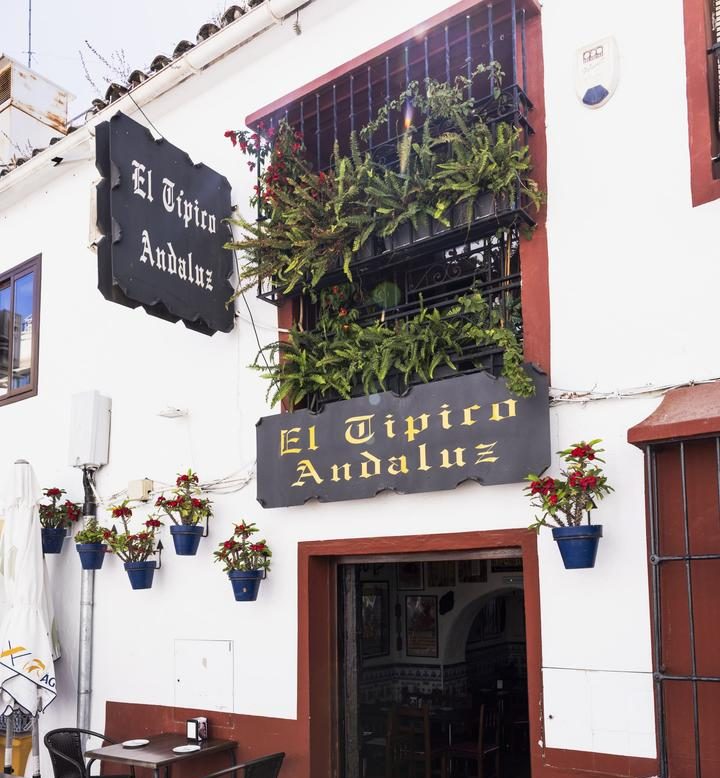
Today Calle Caridad is one of the best streets for food in the centre of Estepona, but it wasn't always that way. According to the older folk in the neighbourhood, for centuries this area was on the edge of town, where inns were built for muleteers and travellers. The El Típico Andaluz building, with its thick walls and arched passageways, was one of them.
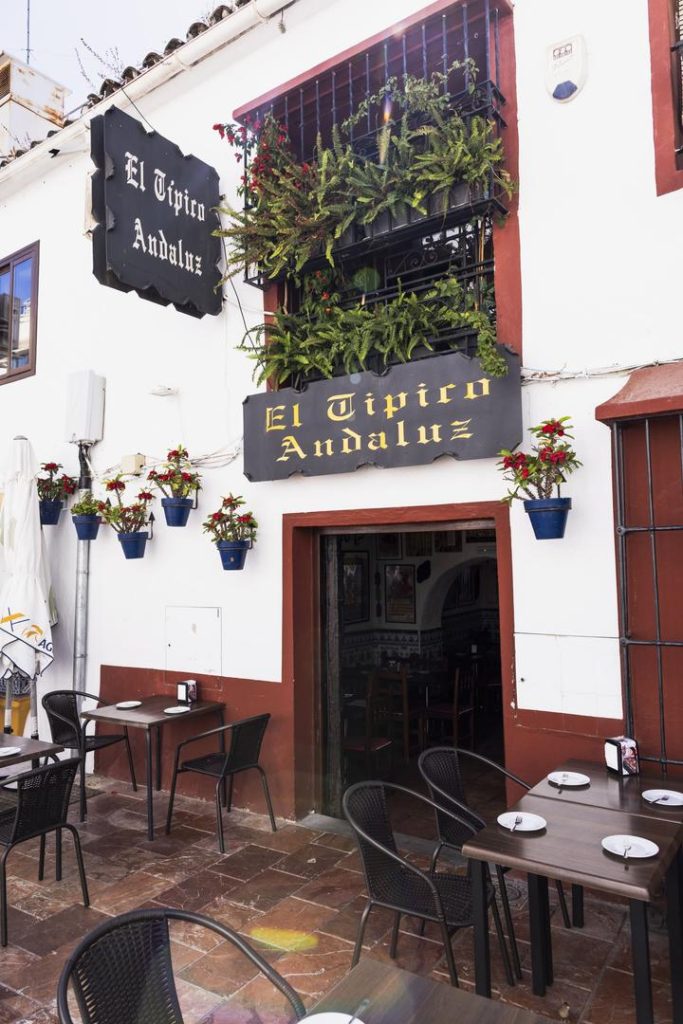
In 1962 the first bar on the street opened here: El Típico Andaluz. It started out as a bar for the town's young people and became a meeting point for decades. There are couples who met here at fifteen and, now in their seventies, still come for a drink in the same place. Other bars followed, and little by little Calle Caridad became what it is today.
For 38 years Javier ran El Típico. His time is remembered for good ham, simple dishes, fair prices and a friendly, down-to-earth welcome. There were times with queues at the door that people in the neighbourhood still talk about. In October 2024 Javier retired and, after a very careful renovation, the bar reopened on 5 December 2025.
What we're proudest of in that renovation is what wasn't touched: the façade, the old doors, the walls, the arches, the posters and poems from other times, the historic names of the different areas of the bar and the collection of knives worn down by decades of carving ham. The only thing lost, out of necessity, was the old fireplace by the entrance, which many customers still remember.
Tips for photographing the old town
- Get up early: between 8:00 and 10:00 the light is soft and the streets are almost empty.
- Catch the sunset: the last hour of the afternoon turns the white façades golden and makes the flowers glow.
- Look up: window grilles, balconies, tiled street names and the tops of the towers make great shots.
- Look for the details: a single flowerpot in a window, a cat on a doorstep or an old door tell you more than a panoramic shot.
- Step inside places with history: inside El Típico there are antiques, bullfighting and flamenco posters and corners that feel like another era. If you ask us, we'll be delighted for you to take photos.
The old town at night
When the sun goes down, the old town changes its skin. The streets are lit by lanterns, the terraces fill up and the atmosphere feels more village than tourist resort. It's the best time for tapas, a relaxed dinner or a glass of wine at a table out on the street.
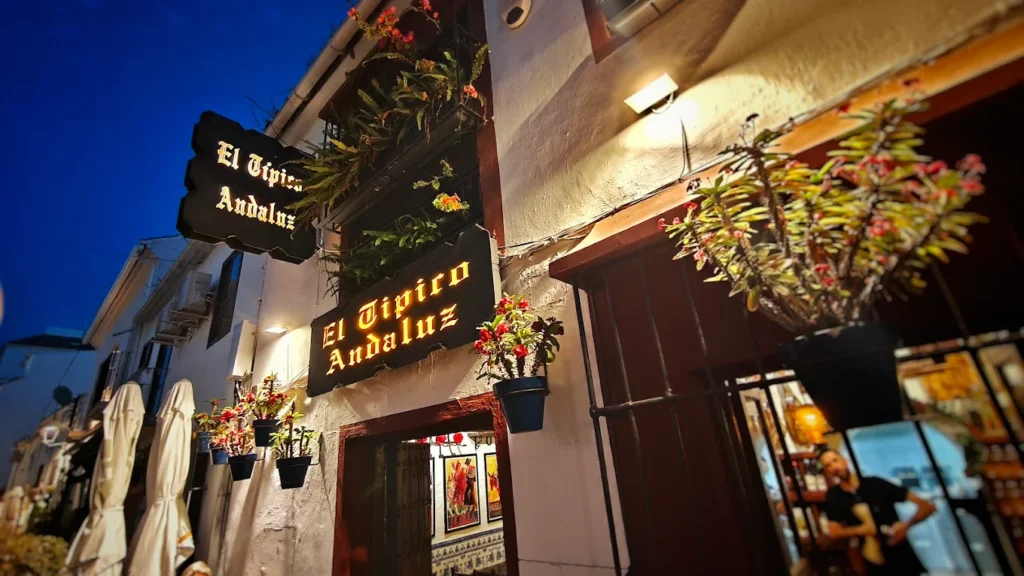
In summer, nightlife in the centre goes on until late. In winter, though, the old town gets back to its village pace: fewer people, more calm and tables that are easy to get. Our kitchen is open until midnight, every day.
The old town out of season: the best-kept secret
Many visitors only know Estepona in summer, and that's a shame. From October to March the old town belongs to the locals. The weather is nearly always good, the flowers are still on the façades, the Christmas lights fill the centre and you can stroll around without dodging anyone.
For us it's the best time for a long weekday lunch: a table on the terrace in the midday sun, a board of Iberian cured meats, some homemade croquettes and lingering at the table without watching the clock. If you live on the Costa del Sol, we encourage you to take a day trip to Estepona's old town in winter. It'll surprise you.
Practical tips for visiting the old town
- Shoes: comfortable, with a good sole. The cobbles are beautiful but treacherous in heels.
- Car: it's easiest to park outside the pedestrian area and walk in. You can get round the whole centre on foot.
- Accessibility: much of the centre is pedestrianised and the central murals route is suitable for pushchairs and wheelchairs. Some streets are steep or have steps, so it's worth asking at the Tourist Office.
- Water and shade: in summer, avoid the middle of the day and make the most of cool indoor spaces, like the Orchid House, the castle or a thick-walled place like ours.
- Opening times: churches and museums have their own hours. Check before you go so you don't find the door closed.
The old town at fiesta time
There are days when Estepona's old town puts on its finest. At Easter the brotherhoods process through its narrow streets and the smell of incense mixes with the flowers. In May, for San Isidro, the town heads off on pilgrimage. July brings the main summer fair, held from 7 to 12 July in 2026, and the Virgen del Carmen procession, when on the 16th she is taken out to sea with the fishermen.
And in December, the Christmas lights turn Plaza de las Flores and the streets of the centre into one of the loveliest walks on the Costa del Sol. It's also the season for work lunches, family reunions and dinners with friends who come home for the holidays. If you're planning to celebrate something in the old town, call us well in advance: we love setting up long tables.
FAQs about Estepona's old town
How long does it take to walk round Estepona's old town?
About two hours at an easy pace. If you add the castle, the Orchid House and lunch, allow half a day.
Where is Plaza de las Flores?
Right in the historic centre of Estepona. It's the main square of the old town and home to the Tourist Office.
Why are Estepona's flowerpots so colourful?
It's part of the «Estepona, Garden of the Costa del Sol» project. Many streets have all their flowerpots painted the same colour, which makes them very easy to recognise.
What is there on Calle Caridad in Estepona?
It's one of the liveliest food streets in the centre. It's home to El Típico Andaluz, the first bar on the street, open since 1962.
Can you visit the old town with children?
Yes. Hunting for colourful streets and murals is a game they love, and the Orchid House is usually a big hit.
End your walk on Calle Caridad
You explore Estepona's old town on foot, but you remember it with your stomach. After the flowers, the murals and the squares, come and sit down in one of the oldest places in the centre and find out why several generations of locals have made this corner of Calle Caridad their own.
- Address: C. Caridad, 55, 29680 Estepona, Málaga
- Phone and bookings: 663 746 370
- Kitchen: 13:00 to 16:00 and 19:00 to 00:00, every day
- Street terrace and indoor dining room with original walls and arches