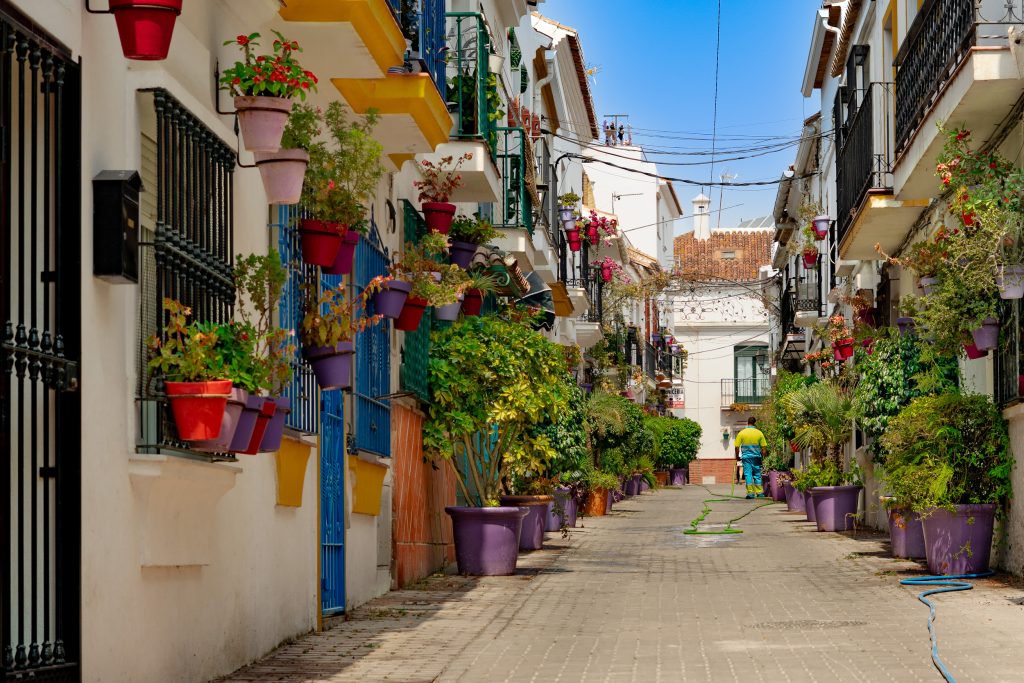
When you sit on a terrace in Estepona's old town, with colourful flowerpots all around and the bell tower peeking out between the rooftops, it's easy to forget you're standing on ground with thousands of years of history.
Phoenician sailors, Roman legions, Moorish governors, Castilian kings, Barbary pirates, Napoleon's troops and, much later, the first tourists to discover the Costa del Sol all passed through here.
This is the history of Estepona, told from one of its oldest corners.
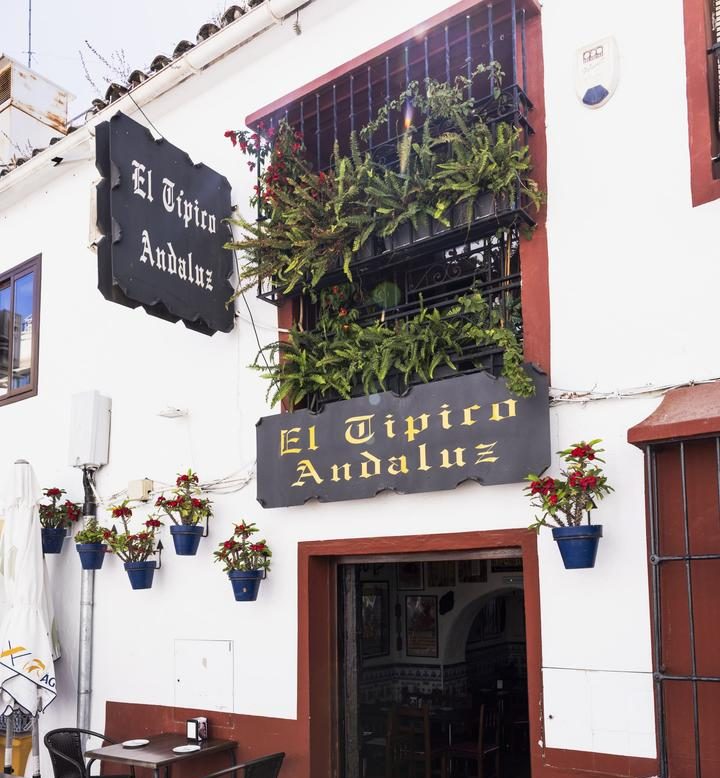
At El Típico Andaluz we like telling this story because it's a little bit ours too. Our building, as the neighbourhood remembers it, was an 18th-century inn, right at the time Estepona became an independent town. And the bar opened in 1962, just as the town was starting to change forever. So before we ask you to come and see us, let us tell you where all of this comes from.
The first settlers: flint, dolmens and a river
Estepona's history begins long before the town existed. Flint tools and megalithic structures have been found within its boundaries, such as the Corominas burials, dated to between the Copper Age and the Bronze Age.
The people who lived here had everything an ancient community looked for: fresh water from the rivers running down from Sierra Bermeja, fertile land, game in the hills and a generous sea.
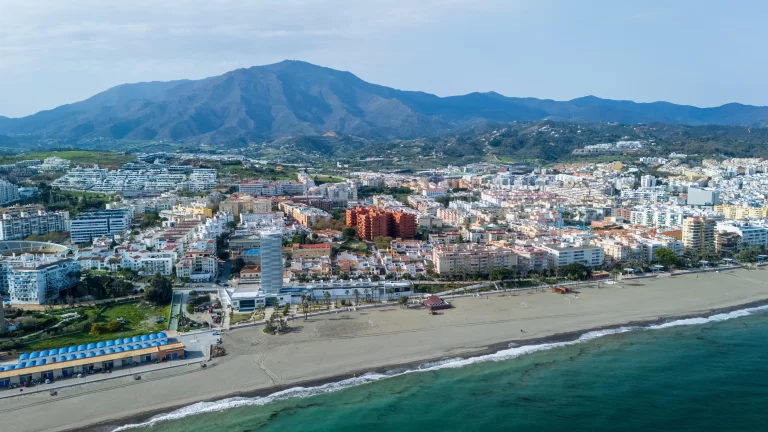
That same landscape still explains Estepona today: the mountains behind, the farmland in the middle and the sea in front. If you go up the Mirador del Carmen on a clear day, you'll see at a glance why people decided to stay.
Phoenicians, Iberians and Romans: the Astapa and Salduba debate
When it comes to Estepona's ancient origins there are more questions than certainties, and that has its charm too. Some writers link it to Astapa, a coastal settlement of Phoenician tradition whose name has been interpreted as something like «city of water» or «coastal town». It would have been a stopover port between Gadir, today's Cádiz, and Malaca, today's Málaga. Other historians place the Iberian and later Roman town of Salduba in this area.
What local chronicles do record is that during the Second Punic War the town stayed loyal to Carthage and eventually surrendered to the Roman troops of Lucius Marcius around 208 BC. From then on, the Estepona coast became part of the network of villas, salted-fish factories and roads of southern Hispania. Remains of Roman villas and coins found in the municipality confirm that presence.
Estebbuna: Moorish Estepona
The name we use today comes from the Moorish period. Sources record it as Estebbuna or Al-Estebbuna, a coastal fortress that kept watch over the shore between Marbella and Gibraltar. For centuries it was a small but strategic outpost on a hotly contested sea frontier.
In 1342 its waters were the setting for a major naval battle in the so-called Battle of the Strait. A Christian fleet, with Aragonese galleys backed by Castile and Genoa, defeated a North African squadron off the coast of Estepona. This was the time of Alfonso XI, when control of the Strait decided the future of the peninsula.
From that Muslim Estepona, the layout of the Villa quarter remains and, according to tradition, so does the origin of the Clock Tower, which many locals still call the old minaret.
The Christian conquest and the silent years
In 1456 and 1457, during the reign of Henry IV of Castile, Estepona passed into Christian hands. The townspeople had refused to pay tribute to the king and the response was military. The king ordered a Christian fortress to be built, but the town was left practically empty for decades: a frontier post, exposed to attacks and hard to hold.
Life slowly returned from 1502, when resettlement was encouraged and the defences were rebuilt. With the Catholic Monarchs now established in the former Nasrid kingdom, Estepona began to grow as a town of fishermen, farmers and soldiers on guard.
Watchtowers, pirates and San Luis Castle
The 16th century was the century of fear of the sea. Barbary pirate raids were constant along the whole Mediterranean coast, and Estepona filled up with watchtowers that signalled to each other with smoke by day and fire by night. Several still stand along the municipality's coastline, some more than 500 years old.
After the Morisco revolt of 1568 the coastal defences were strengthened, and in the last quarter of that century San Luis Castle was built, with three artillery bastions and a large arcaded parade ground. In the mid-18th century it was converted into a battery, the Lisbon earthquake of 1755 damaged it and in 1812 French troops blew it up as they retreated. For more than a century it was a ruin among houses. Since December 2024 you can visit the inside as an exhibition centre, and in its first year it welcomed more than 34,500 visitors.
1729: the year Estepona came of age
For centuries Estepona depended on Marbella. That changed on 21 April 1729, when King Philip V granted it the Carta de Villazgo (town charter). Around five hundred residents gained their own town council, their own municipal boundaries and the right to decide over their land, their woodland and their fishing.
That independence was soon felt on the streets. Between 1725 and 1766 the Church of Nuestra Señora de los Remedios was built, with that distinctive entrance mixing Baroque and colonial touches. The town began to spread beyond the walls of the Villa quarter, growing along the roads to Casares, Ronda and the coast.
Along those roads, wayside inns sprang up where muleteers, traders and travellers stopped for the night. According to the oral history passed down in the neighbourhood, the building that now houses El Típico Andaluz was one of those 18th-century inns, in what was then the edge of town. Its thick walls and arched passageways, which we kept in the renovation, are the best reminder of that time.
The 19th century: squares, manor houses and village life
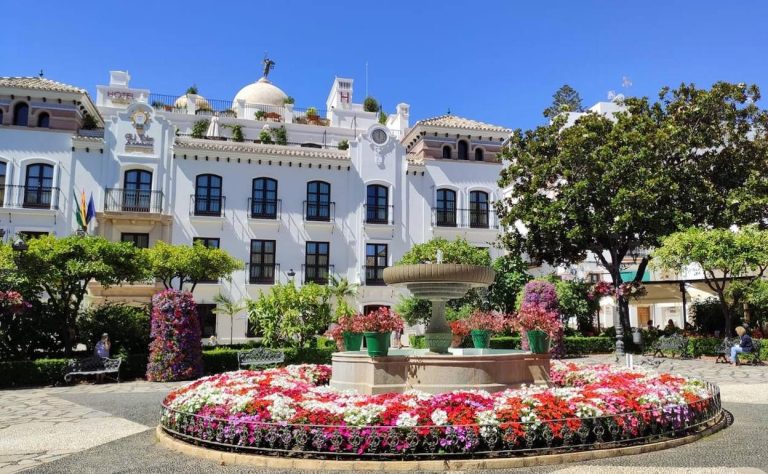
The 19th century gave Estepona its squares and its grandest houses. Today's Plaza de las Flores was laid out as the main square of the town's eastward growth, and by 1842 it appears as Plaza de la Constitución, in honour of the 1812 Constitution known as «La Pepa». Around it, the wealthier families built their homes, with ironwork, balconies and patios you can still see.
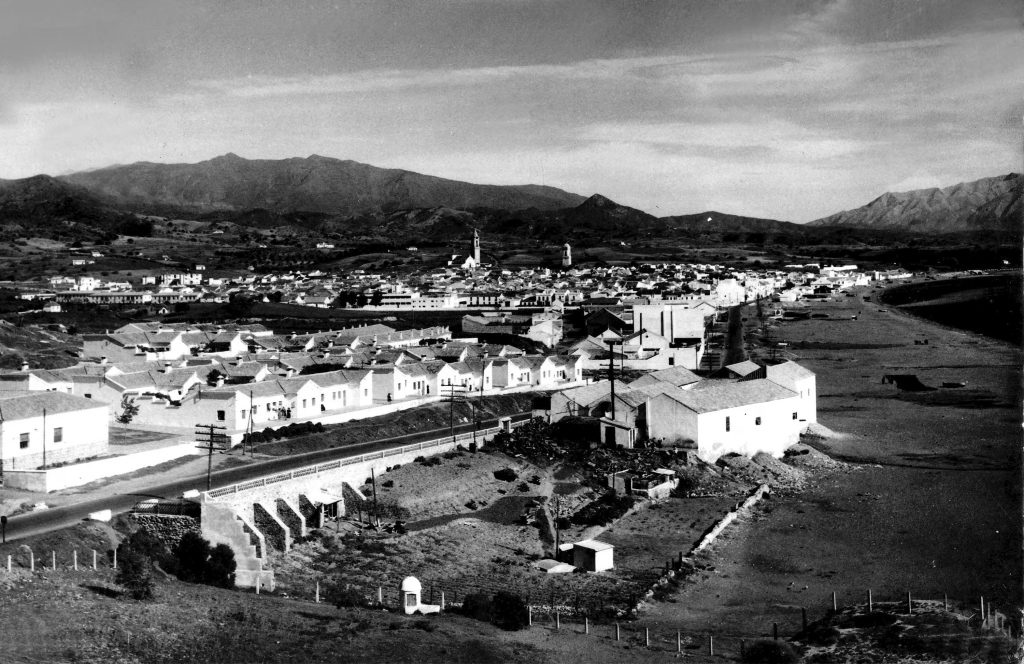
The 1894 town plan shows a town laid out in a grid, with streets such as Calle de la Cruz, Calle del Chorro and Calle Ancha de Santa Ana. The economy still looked to the land and the sea: market gardens, vineyards, livestock in the mountains and a fleet of boats that went out for sardines and anchovies. The population grew slowly throughout the century.
The 20th century: from fishing village to holiday destination
By 1921 the Paseo del Carmen and Paseo Principal were already lined with double rows of trees, and life in Estepona still revolved around the harbour and the land. Purse-seine fishing, the boats coming back at dawn and the auction at the fish market were part of everyday life in the town, just as they are today.
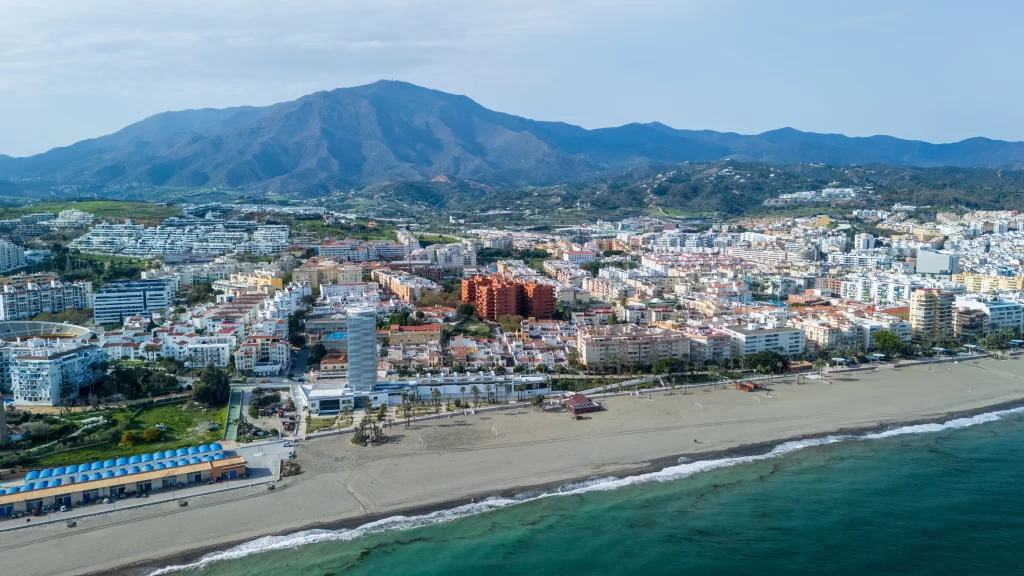
Everything began to change in the sixties. The Costa del Sol became fashionable across half of Europe, and the first tourists arrived, along with the first foreigners who stayed to live and the first housing developments. In 1962, right on Calle Caridad, El Típico Andaluz opened: a bar for the town's young people that ended up being the first on the street and a meeting point for several generations. Even today, customers come in who first met here at fifteen.
In 1972 the town opened its bullring, designed by Juan Mora Urbano and billed as the world's first asymmetrical bullring, with Antonio Ordóñez as its first impresario. These were years of flamenco, bullfighting and lively nightlife, and the neighbourhood remembers El Típico as part of that scene of artists and fans.
The 21st century: the Garden of the Costa del Sol
While other towns along the coast grew on concrete, Estepona decided to look after its old town. Over the last decade more than 130 streets and over 19 kilometres of public roads have been renovated, the façades have been filled with flowerpots and more than a million flowers were planted in a single year. In 2022 the «Estepona, Garden of the Costa del Sol» project received the Málaga Viva Award.
The flowers were joined by the murals, now more than 60, the Poetry Route, the Orchid House in 2015, the Mirador del Carmen in 2023, the opening of San Luis Castle as a museum in 2024 and the Museo del Mar in 2025. In 2025 Estepona had 79,593 residents, 22,778 of them foreign nationals, and 25 hotels with 6,923 beds.
We went through our own change too. After 38 years in charge, Javier retired in October 2024 and the bar reopened on 5 December 2025, after a renovation that respected every wall, every arch and every old poster.
The traditions that explain Estepona
A town's history isn't written only in dates and battles. It's also written in its fiestas, which are how people remember who they are.
The Virgen del Carmen, patron saint of fishermen, is taken out to sea every 16 July, escorted by the boats from the harbour. It's the fiesta that best sums up Estepona's fishing past, and the Museo del Mar devotes one of its films to it. San Isidro Labrador, the town's patron saint, is celebrated in May with a pilgrimage that reminds us Estepona was also, for centuries, a town of market gardens and farmland.
Easter Week, with its brotherhoods processing through the old town, connects with the popular faith found in so many Andalusian homes, and on our own walls. And the main summer fair in July, held from 7 to 12 July in 2026, is the heir to the old livestock and trade fairs that kept the town's inns and wayside taverns busy.
Sea, land, faith and fiesta. Understand these four things and you understand Estepona.
The history of Estepona at a glance
| Date | What happened |
|---|---|
| 2025 | The Museo del Mar opens. El Típico Andaluz reopens on 5 December |
| 2024 | San Luis Castle opens as an exhibition centre |
| 2023 | The Mirador del Carmen opens |
| 2015 | The Orchid House Botanical Park opens |
| 1972 | The asymmetrical bullring opens |
| 1962 | El Típico Andaluz opens, the first bar on Calle Caridad |
| 1842 | Today's Plaza de las Flores is recorded as Plaza de la Constitución |
| 1812 | French troops blow up San Luis Castle |
| 1755 | The Lisbon earthquake damages the castle |
| 1729 | Philip V grants the town charter (Carta de Villazgo) |
| 1725 to 1766 | The Church of los Remedios is built |
| Late 16th century | San Luis Castle is built |
| 1502 | The town is resettled |
| 1456 to 1457 | Castilian conquest under Henry IV |
| 1342 | Naval battle off Estepona |
| Around 208 BC | Surrender to Rome, according to local chronicles |
| Copper and Bronze Ages | Corominas megalithic burials |
Where to see Estepona's history today: a two-hour route
If we've sparked your curiosity, here's the route we suggest so you can see everything we've told you with your own eyes:
- San Luis Castle and the Villa quarter: the medieval core and the defences against the sea.
- The Clock Tower: a reminder of the old main church and, according to tradition, of the Moorish minaret.
- The Church of Nuestra Señora de los Remedios: 18th-century Estepona and its independence.
- Plaza de las Flores: 19th-century growth and the town's social life.
- The Bullfighting Museum and Museo del Mar, at the bullring: the two great popular traditions of the 20th century.
- Calle Caridad: the inn that became a bar and is still open. The route ends here, with a beer and a plate of Iberian ham.
If you'd like to add more stops, our guide to what to see in Estepona has the town's fifteen must-sees.
FAQs about the history of Estepona
Where does the name Estepona come from?
From the Moorish name Estebbuna or Al-Estebbuna, which was what the coastal fortress was called in the Middle Ages. Some writers link it to the ancient town of Astapa.
When did Estepona become independent from Marbella?
On 21 April 1729, when Philip V granted it the Carta de Villazgo (town charter).
Can you visit San Luis Castle?
Yes. Since December 2024 it has been an exhibition centre and you can explore the inside.
Why is Estepona called the Garden of the Costa del Sol?
Because of the town council project that has renovated more than 130 streets in the centre and filled them with flowers and flowerpots.
Which historic bars and restaurants are left in the old town?
One of the best known is El Típico Andaluz, on Calle Caridad, open since 1962 in a building the neighbourhood remembers as an 18th-century inn.
End the story on Calle Caridad
Estepona's history isn't only in its museums. It's in its walls, its squares and the bars where several generations have celebrated, fallen in love and said their goodbyes. Come and discover ours over a plate of Iberian cured meats and a local wine.

- Address: C. Caridad, 55, 29680 Estepona, Málaga
- Phone and bookings: 663 746 370
- Kitchen: 13:00 to 16:00 and 19:00 to 00:00, every day